Murano glass is glass made on the island of Murano in the Venetian lagoon. Its collective trademark, Vetro Artistico Murano, was established by the Veneto Region and certifies that a product was made on the island (Consorzio Promovetro Murano). "Murano-style" describes a look, not an origin. Hand-blown shades made elsewhere, including ours, are not Murano glass.
Murano glass is glass made by glassworks on the island of Murano, Venice.
Vetro Artistico Murano is the collective trademark for that glass, managed by the Consorzio Promovetro Murano for companies authorized to use it (Consorzio Promovetro Murano).
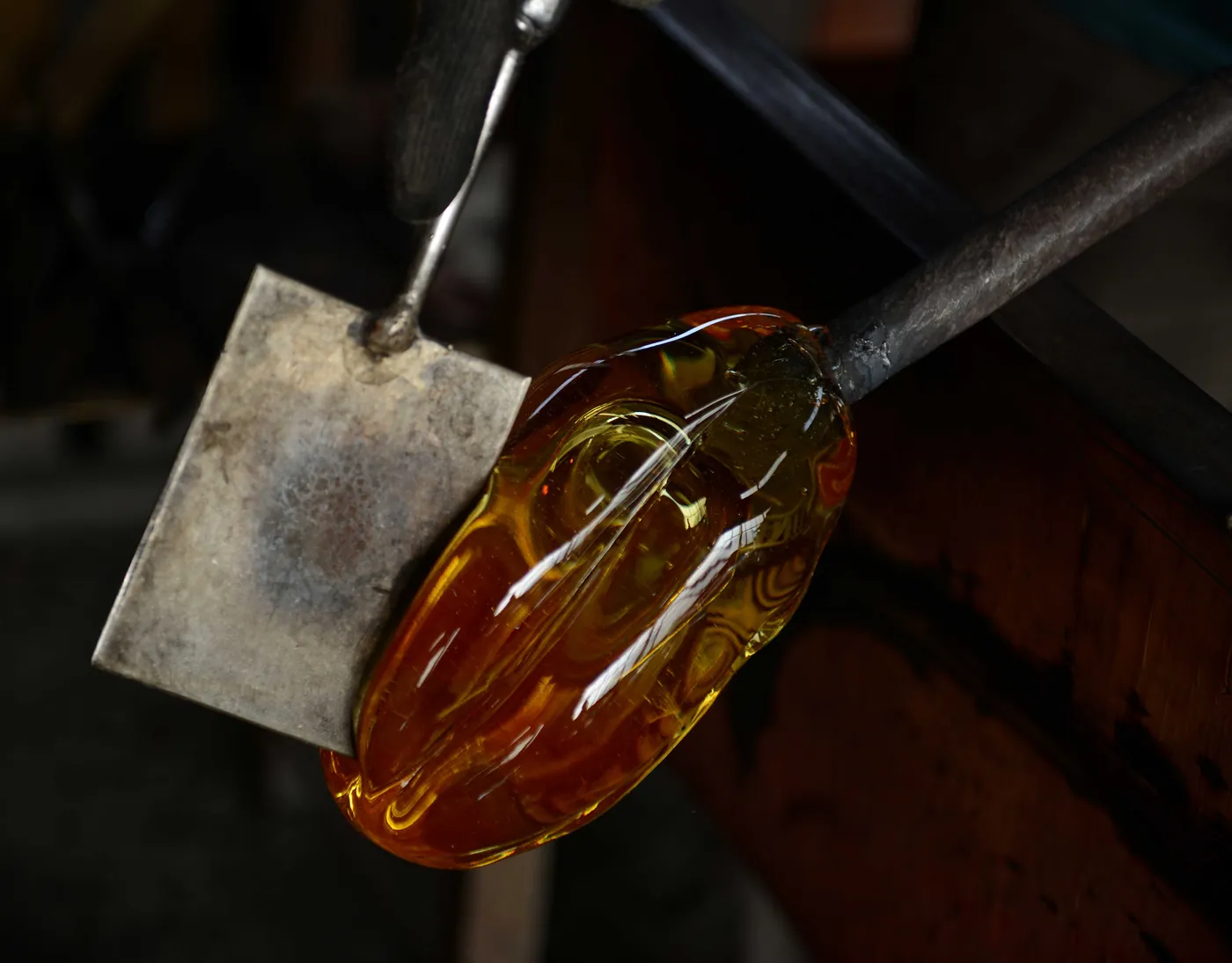
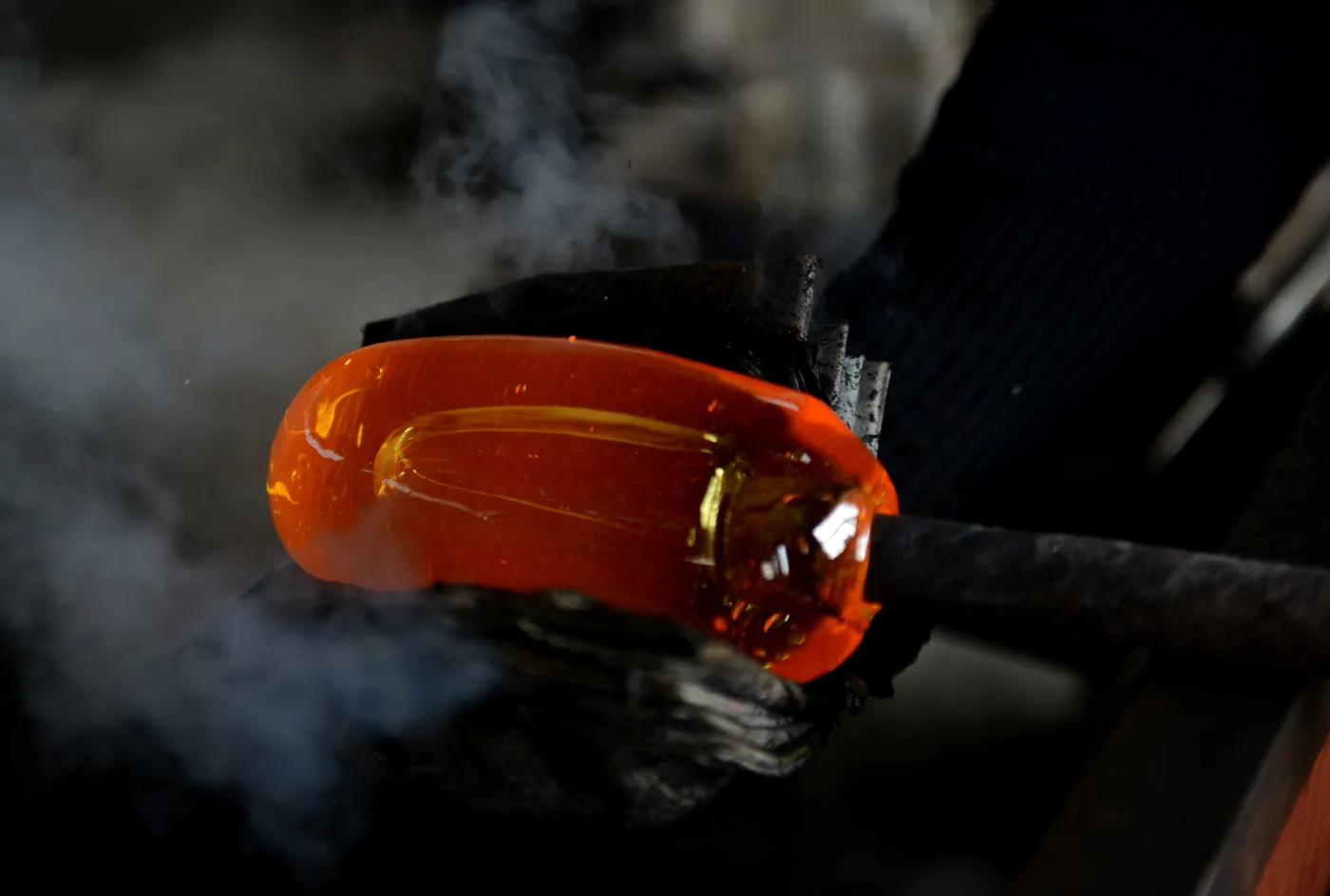
Hand-blown describes a process: the glass is shaped on the blowpipe by a blower, whatever the place it is made.
The word Murano turns up in mood boards, product names and client briefs for hand-blown pendant shades. The word carries two meanings at once: a place and a look. Mixing them up can mislead a customer. This guide separates the two, and explains how a shade made by a factory in Zibo, China, can be described accurately.
What makes glass "Murano glass"?
The place of manufacture. The Consorzio Promovetro Murano describes Vetro Artistico Murano as the collective brand established by the Veneto Region and managed by the consortium, and it states that the mark certifies that the products are made on the island of Murano (Consorzio Promovetro Murano). Products carry the mark only when they come from companies authorized to use it.
The mark says nothing about a particular shape or color. A plain clear vase from an authorized workshop on Murano can carry it; a richly colored piece made anywhere else does not.
What does "Murano-style" mean?
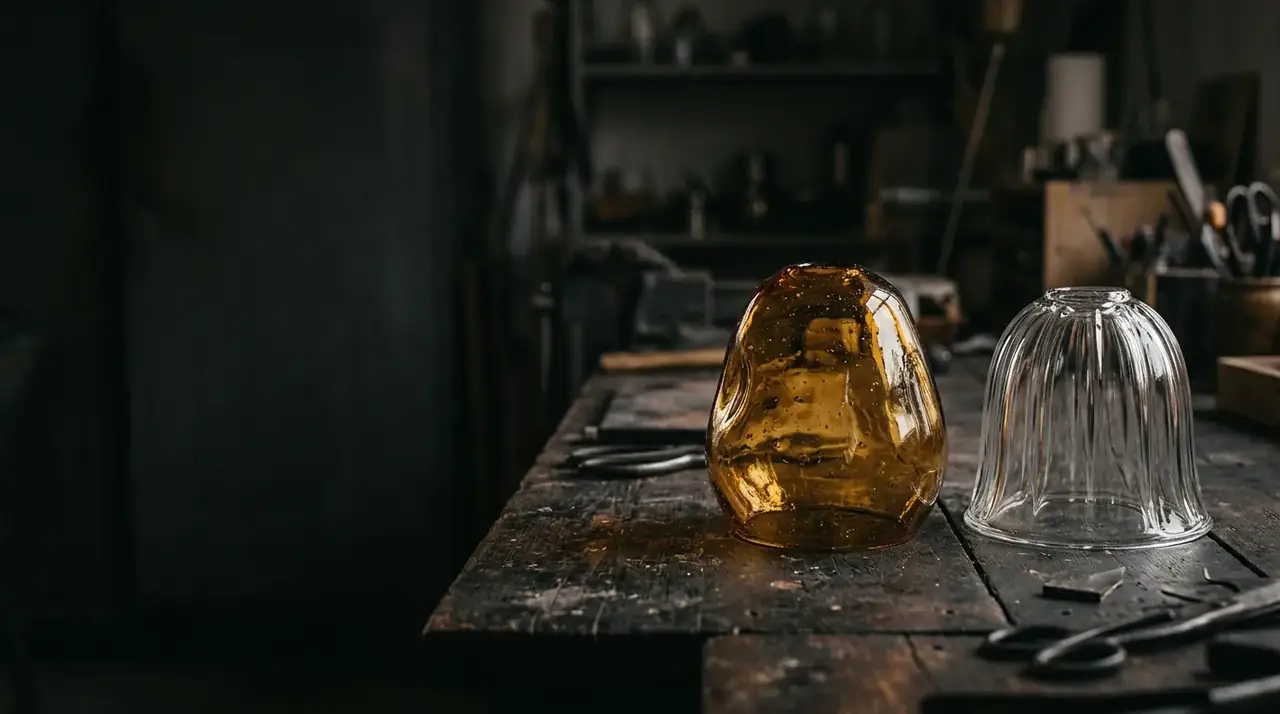
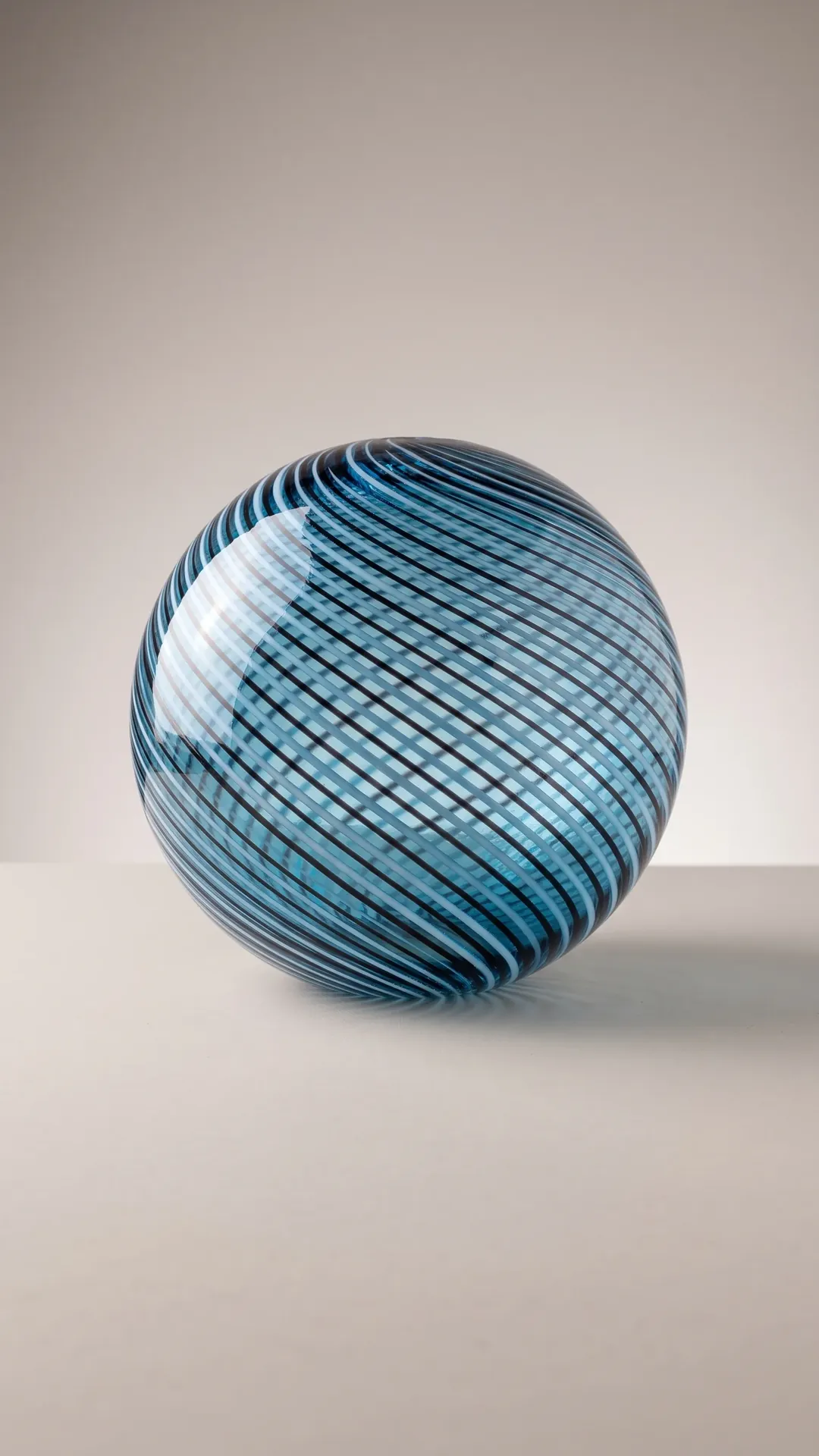
In product names it usually stands for a look rather than a place: strong color, threads of glass in the wall, swirls or layered color. Those effects come from the hand-blowing process, which is practiced in many countries. Our own hand-blown shades can be made with layered two-color glass, swirls, gradients and thread wrapping (SIGA, 2026), as on our blue and white spiral globe and clear thread-wrapped cylinder. Our blown glass pendant shades page shows hand-blown and molded shades side by side.
A similar look is not the same origin. When a product page uses the word Murano for glass made elsewhere, a buyer can reasonably read it as a claim about where the glass was made.
Is Murano glass made differently from other hand-blown glass?
The basic methods are shared. Glassblowing is old, and the Metropolitan Museum of Art describes mold blowing as developing soon after free-blowing, as an offshoot of it (The Met). In mold blowing, hot glass is inflated in a mold and takes its shape (Corning Museum of Glass), and a full-size mold gives the object its final form (Corning Museum of Glass).
What a buyer can check is the process and the origin of a given product, not a general ranking of places. We make fully hand-blown shades and shades blown into molds, and every shape in our catalog is listed as one or the other (SIGA, 2026). The guide to telling hand-blown glass from molded glass shows what to look for across a set.
How should I describe hand-blown shades made in China?
By process and origin, in plain words: "hand-blown glass, made in China" or "mouth-blown glass shade". Avoid "Murano" in names and descriptions of glass made elsewhere, since the mark ties the word to the island. If your brief asks for a "Murano look", name the effects you want instead: threads, swirls, layered color or a strong tint. Those can be specified, sampled and approved.
This is general guidance, not legal advice. Labeling and trademark rules differ by market, so check them for the countries where you sell.
| Murano glass | Murano-style hand-blown glass | |
|---|---|---|
| What the term says | Where the glass was made | How the glass looks |
| Proof | The Vetro Artistico Murano mark, for authorized companies | The supplier's statement of process and origin |
| Honest product name | Murano glass | Hand-blown glass, with the country of origin |
When is a Murano-style shade from a factory abroad not the answer?
When the client wants the origin itself. If the brief says Murano glass, only glass made on Murano meets it, and a hand-blown shade from Zibo does not, however close the look. A factory-made shade fits a brief that names effects, colors and a budget for repeat orders, where the minimum is 20 pieces per design (SIGA production data, 2026).
Sources and Further Reading
- Consorzio Promovetro Murano: The Artistic Murano Glass. Describes the Vetro Artistico Murano collective trademark, established by the Veneto Region, and what it certifies. Checked 2026-10-18.
- The Metropolitan Museum of Art: Roman Mold-Blown Glass. Describes mold blowing as an offshoot of free-blowing. Checked 2026-10-18.
- Corning Museum of Glass: Mold Blowing. Defines mold blowing. Checked 2026-10-18.
- Corning Museum of Glass: Molds and Moldmaking. Explains that a full-size mold gives the final form. Checked 2026-10-18.
Frequently Asked Questions
Is all hand-blown glass Murano glass?
No. Murano glass is defined by where it is made: the Vetro Artistico Murano mark certifies that products were made on the island of Murano (Consorzio Promovetro Murano). Hand-blowing is a process practiced in many places, including our workshop in Zibo, China.
Can you make a shade that looks like Murano glass?
We can make hand-blown effects associated with that look, such as layered two-color glass, swirls, gradients and thread wrapping (SIGA, 2026). Describe the effects you want and approve them on the sample; the result is hand-blown glass from China, not Murano glass.
How do I check that glass sold as Murano is genuine?
Ask the seller for the Vetro Artistico Murano mark, which is used by companies authorized by the consortium that manages it, and for the name of the workshop on Murano. A similar look alone does not show where a piece was made.
Want threads, swirls or layered color in a custom shade? Send a sketch and a reference photo, and we tell you what hand-blowing can do.
Ask about your design