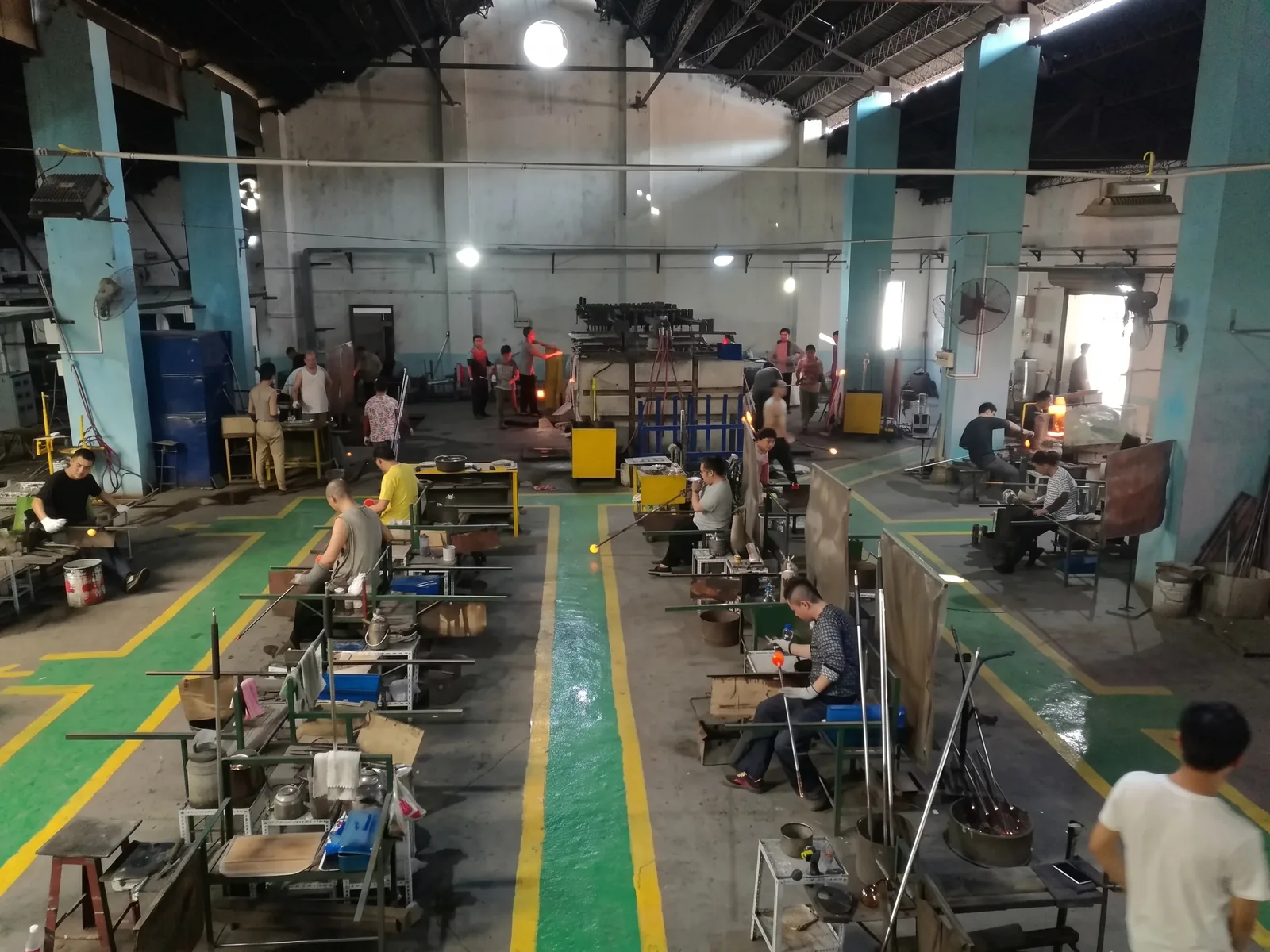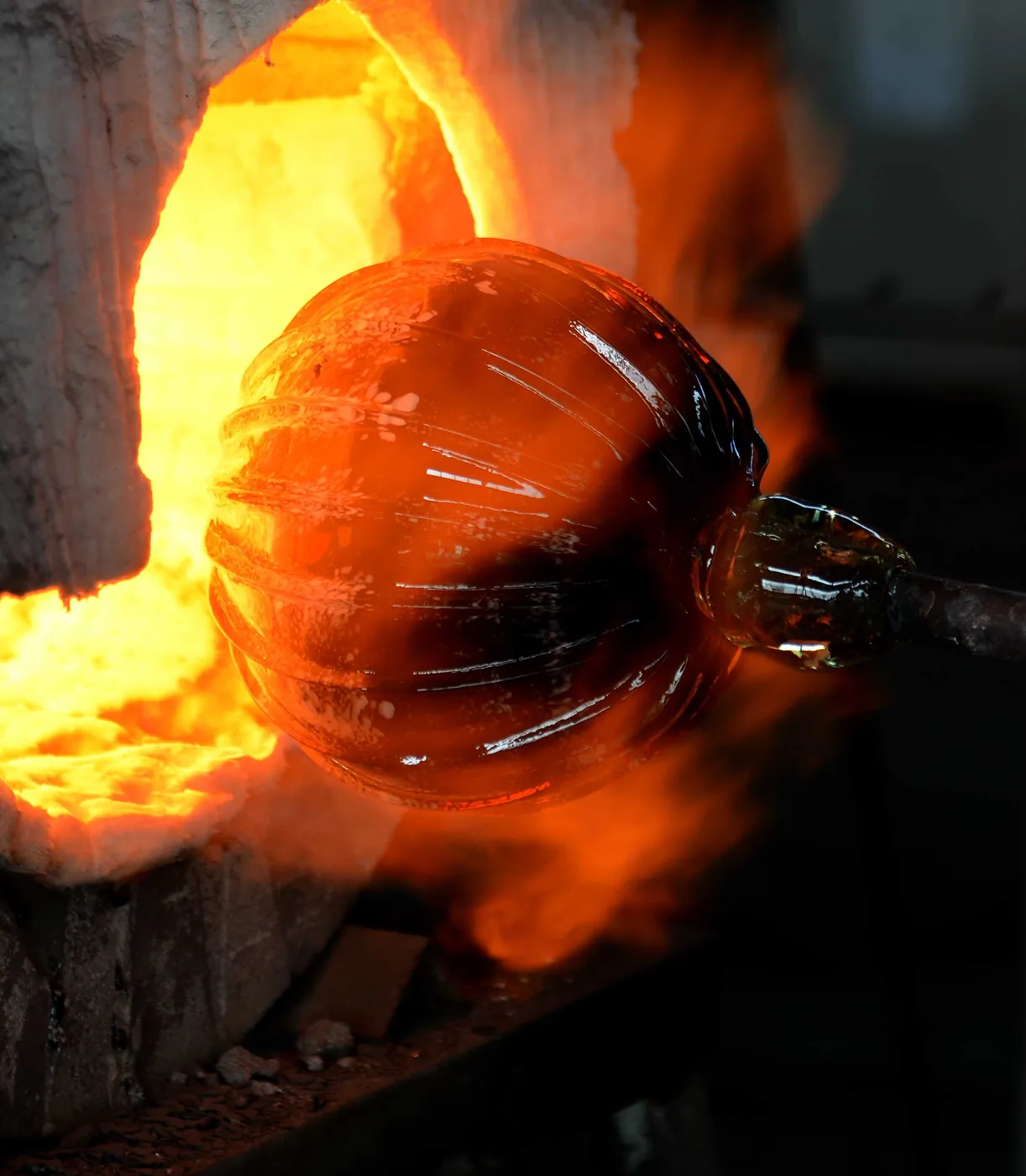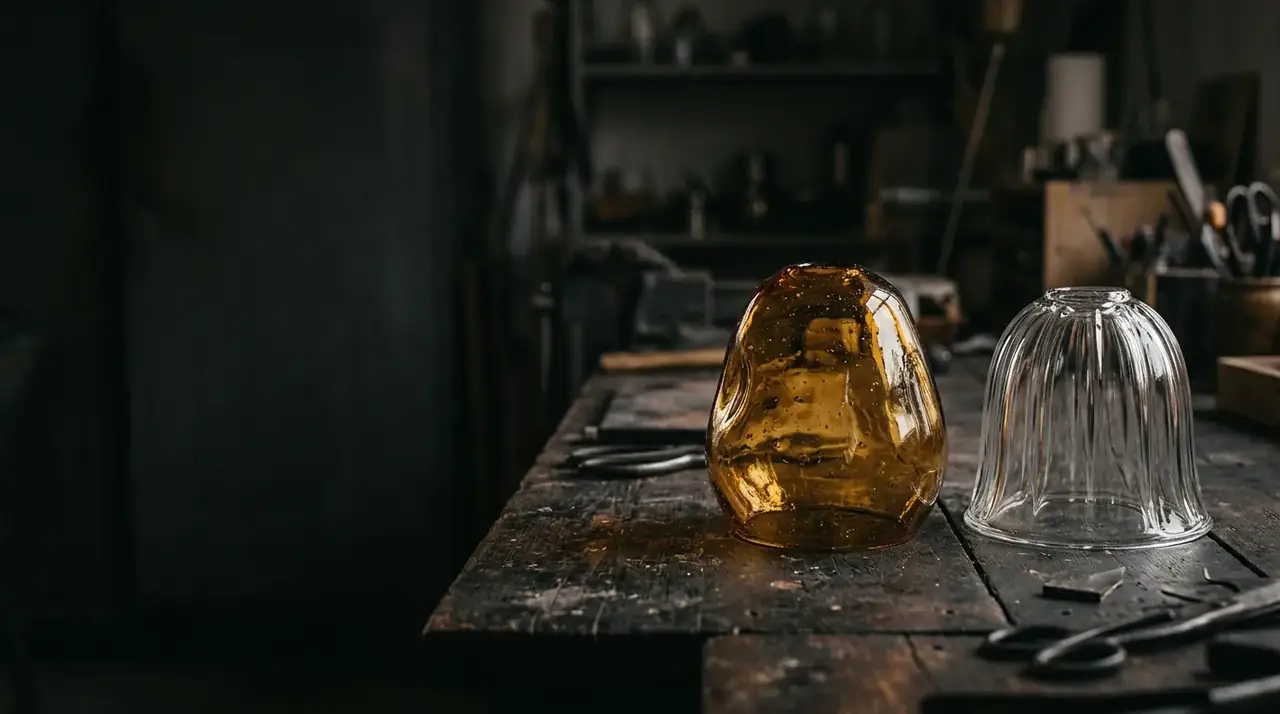
Compare several pieces, not one. On our shades, a fully hand-blown design has a total size error of about 5 mm, while a design blown in a mold repeats within 1 to 2 mm (SIGA workshop estimate, 2026). Hand-blown walls are also thicker and less even. A single photo rarely settles it, so ask the factory which process each shape uses.
Fully hand-blown means the blower shapes the glass on the pipe with tools and breath, without a mold that sets the final form.
Mold blowing is inflating a gather of hot glass inside a mold, so the glass is forced against the inner surfaces and takes the mold's shape and any pattern it carries (Corning Museum of Glass).
Buyers ask this for two reasons: to check that a supplier's "hand-blown" claim is true, and to know how closely the pieces in an order will match. Most online guides answer for collectors of vases and bottles. A lamp shade buyer needs a different test, built around a set of shades and an order. We make both kinds in Zibo, China, so this guide draws on the facts and workshop estimates for our own shades.
Step 1: Compare a set, not a single shade
The most reliable sign is how much the pieces differ from each other. A mold gives every piece the same outer form, and The Met notes that plain mold-blown wares came out of uniform size, shape and volume (The Met). A fully hand-blown set does not repeat that closely.
Put three or four shades side by side and measure the diameter and the height of each. A wide spread points to hand-blown work. A tight spread does not prove a mold, though: a few hand-blown pieces can come out close to each other, so a small set can only point one way. Our figures come from workers and foremen, not from a measured study (SIGA workshop estimate, 2026), so treat them as a guide rather than a test result.
Step 2: Look at the wall
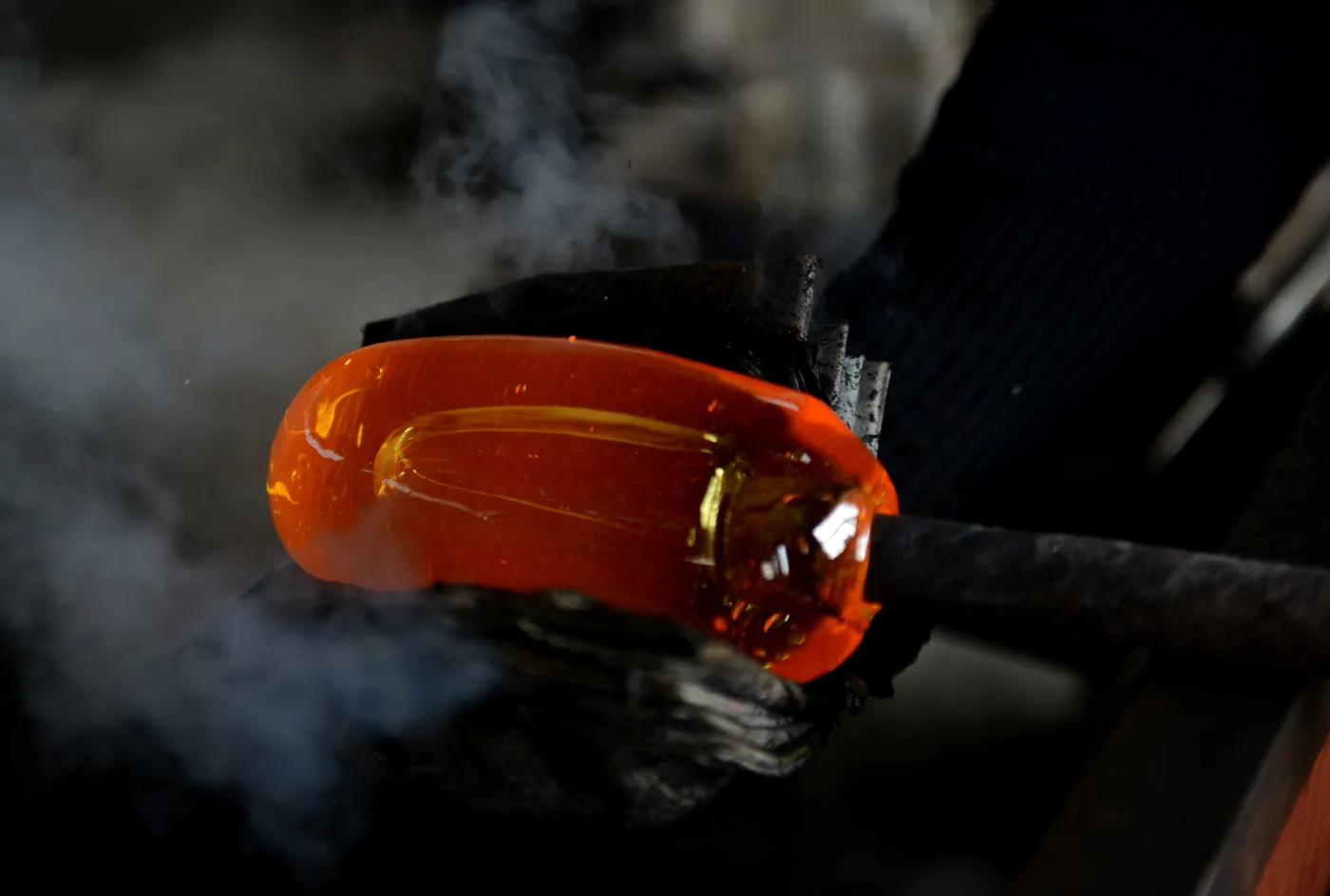
Hold each shade up to a light and look at the edge and the rim. Our hand-blown shades have thicker walls and look less uniform than our mold-blown ones (SIGA, 2026).
Tinted glass makes this easier to see. In colored glass, absorbance rises with the thickness the light travels through, as the Beer-Lambert law states (James E. Shelby, Lehigh IMI). On a tinted hand-blown shade, the thicker areas therefore tend to look darker, and the color can shift across the body. We do not publish a wall thickness figure for our glass.
Step 3: Check how the pattern repeats
A pattern does not prove that a mold was used. Glassblowers have long blown a gather partly into a patterned dip mold and then finished the piece freehand, a method The Met calls pattern molding (The Met). The Corning Museum of Glass makes the same distinction: a dip mold imparts a pattern to the parison before it is blown and tooled, while a full-size mold gives the object its final form (Corning Museum of Glass). Our blowers sometimes use a small ribbed optic mold as a tool in the same way; the shade is still fully hand-blown and carries no mold fee (SIGA, 2026).
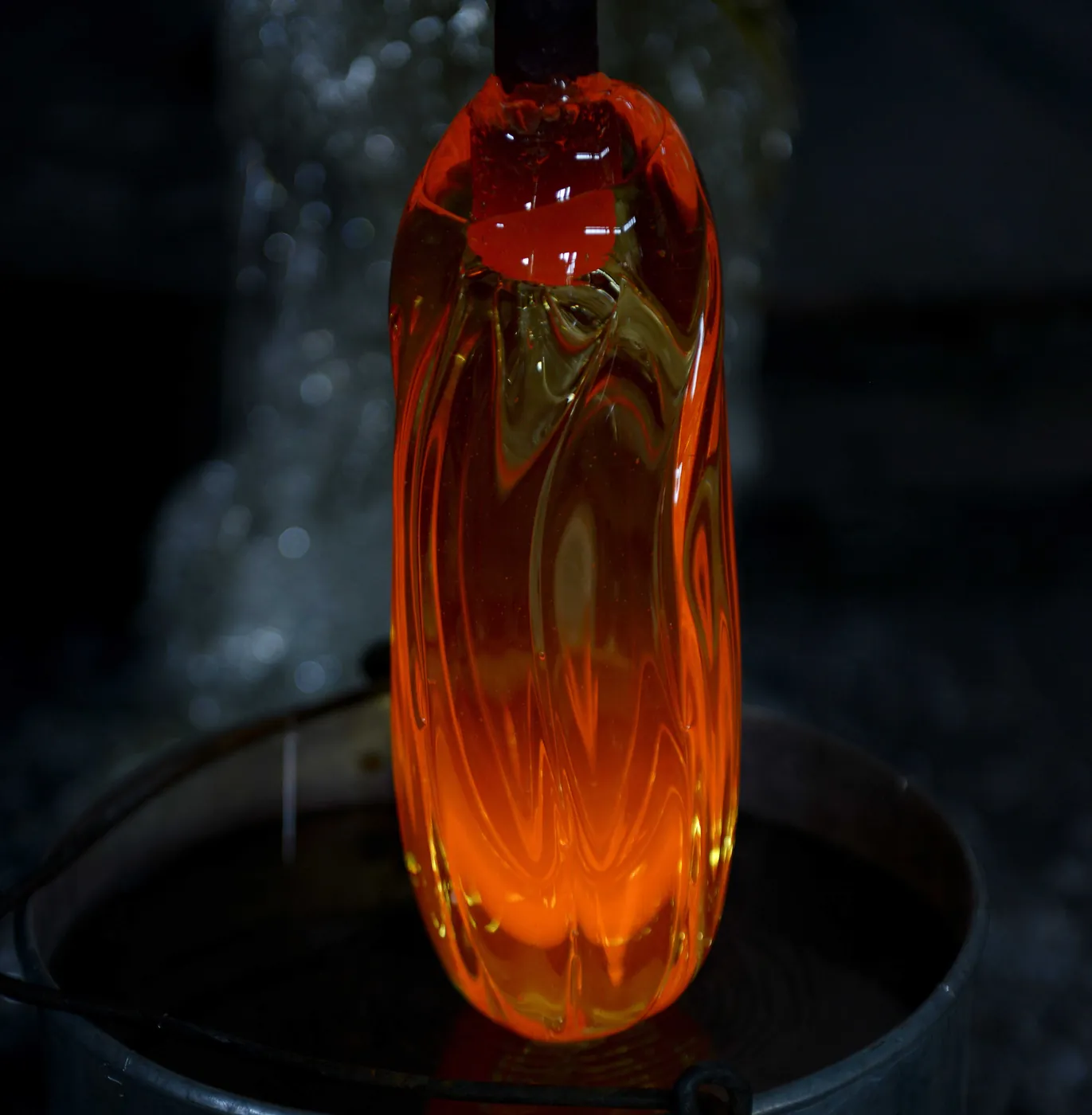
What differs is the regularity. On a molded shade the ribs, dimples or facets sit in the same place on every piece, as on our clear dimpled ball. On a hand-blown ribbed shade, such as the red ribbed pumpkin, the ribs wander slightly from piece to piece.
Step 4: Read the bubbles correctly
Small bubbles are a natural feature of hand-blown glass. We accept them as long as they do not affect use or look (SIGA, 2026). They are a sign of the process, not proof of it, so use them only together with the steps above.
Some marks are defects in any process. We reject large or burst bubbles, stones and other impurities, cracks or stress, and obvious scratches or chips (SIGA, 2026). Our inspection guide explains how to agree these limits before production.
Step 5: Ask the factory, then confirm on the sample
Visual checks narrow it down; the supplier's answer settles it. Ask which process each shape uses and whether a mold fee applies. In our catalog, every shape is listed as fully hand-blown or semi hand-blown, the term we use for shades blown into a mold, and our blown glass pendant shades page shows both side by side.
The approved sample then becomes the reference for the batch. Each hand-blown piece differs slightly, so the sample shows the range you are agreeing to (SIGA, 2026).
Common mistakes when judging hand-blown glass
The first mistake is judging from one piece or one photo; variation only shows across a set. The second is treating every bubble as a defect, which rules out good hand-blown work. The third is assuming that a ribbed pattern always means a mold fee. The fourth is assuming that hand-blown is the cheaper process, one of the price misunderstandings we see (SIGA, 2026); the comparison of hand-blown and mold-blown shades covers cost and lead time.
What this means for your order
If every shade in the order must match closely, choose a mold. If the design welcomes small differences, fully hand-blown suits it (SIGA process advice, 2026). Both processes start at 20 pieces per design (SIGA production data, 2026). If you need a hand-blown look with the repeatability of a mold, neither process gives both, so decide which matters more before you ask for a quote. We are also not the right supplier for orders with excessively strict requirements (SIGA, 2026).
| Check | Points to hand-blown | Points to a mold |
|---|---|---|
| Size across 3 to 4 pieces | Spread approaching 5 mm | Spread within 1 to 2 mm, though a few hand-blown pieces can also fall here |
| Wall | Thicker, less even | More even |
| Pattern | Ribs wander slightly | Same place on every piece |
| Tinted color | Shifts with thickness | More even |
| Supplier answer | No mold fee | Mold fee |
Size figures are for our own shades (SIGA workshop estimate, 2026).
Sources and Further Reading
- Corning Museum of Glass: Mold Blowing. Defines mold blowing as inflating hot glass in a mold so that it takes the mold's shape and decoration. Checked 2026-10-18.
- The Metropolitan Museum of Art: Roman Mold-Blown Glass. Describes molds of two or more parts, the uniform size and shape of plain mold-blown wares, and pattern molding with dip molds. Checked 2026-10-18.
- Corning Museum of Glass: Molds and Moldmaking. Separates dip molds, which impart a pattern before the glass is blown and tooled, from full-size molds that give the final form. Checked 2026-10-18.
- James E. Shelby, Color in Commercial Glasses (Lehigh University IMI glass course, lecture 4). States the Beer-Lambert law, where absorption depends on the thickness of the glass. Checked 2026-10-18.
Frequently Asked Questions
Does a bubble mean a shade is hand-blown?
Not on its own. Small bubbles are common in hand-blown glass, and we accept them when they do not affect use or look (SIGA, 2026). Use them alongside the size spread across a set and the evenness of the wall, which say more about the process than a single bubble does.
Can a ribbed shade be fully hand-blown?
Yes. A blower can shape the ribs with a small optic mold used as a tool and then finish the shade freehand. On our shades this still counts as fully hand-blown and carries no mold fee (SIGA, 2026). The ribs on such pieces vary slightly from one shade to the next.
Will you tell me which process my design needs?
Yes. For a new design we recommend a mold when size and tolerance are strict, and fully hand-blown when the shape may vary (SIGA process advice, 2026). Existing shapes in our catalog are listed as fully hand-blown or semi hand-blown, and only molded shapes carry a mold fee.
Not sure which process your design needs? Send the drawing and your tolerance, and we tell you whether it suits hand-blowing or a mold.
Ask about your design