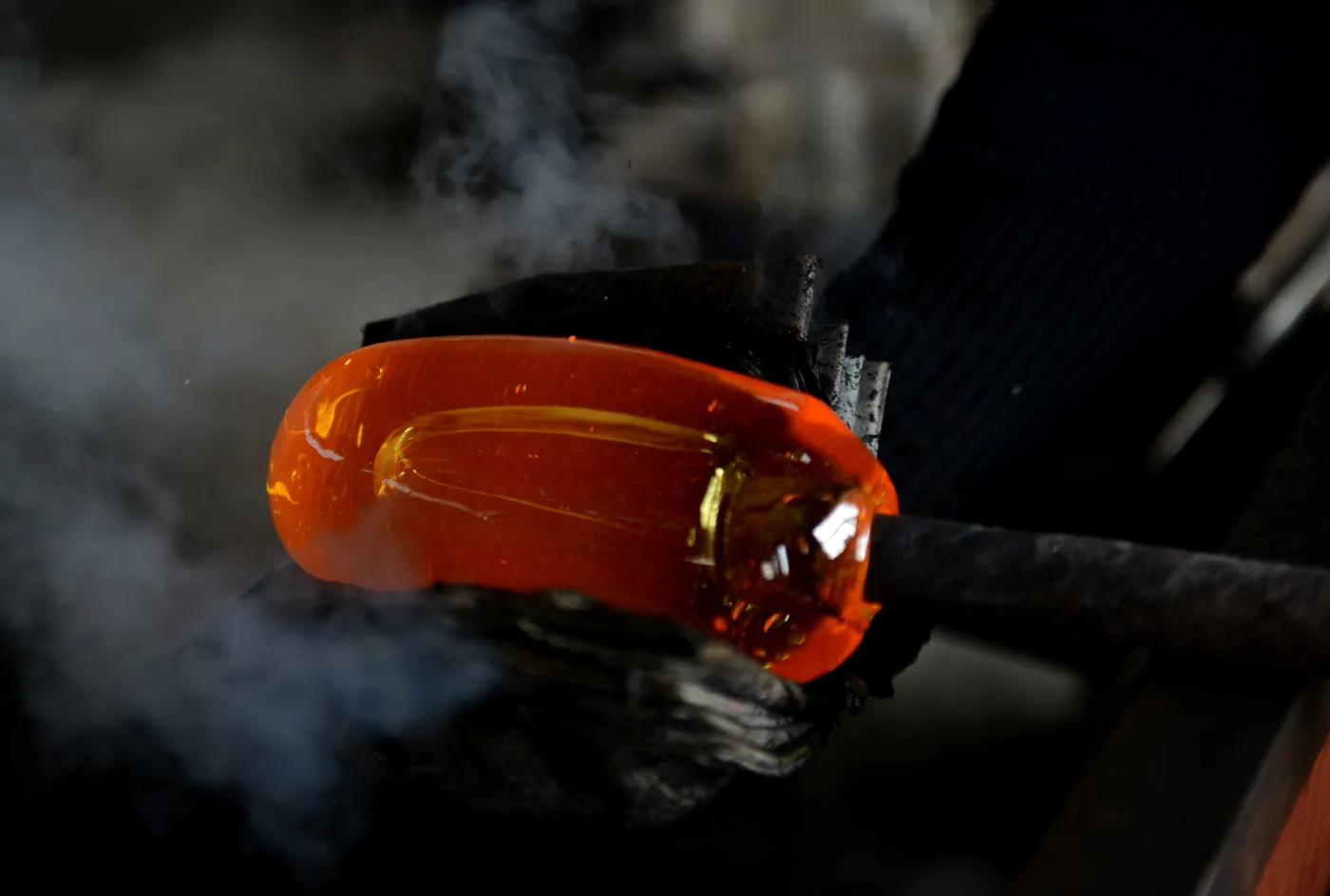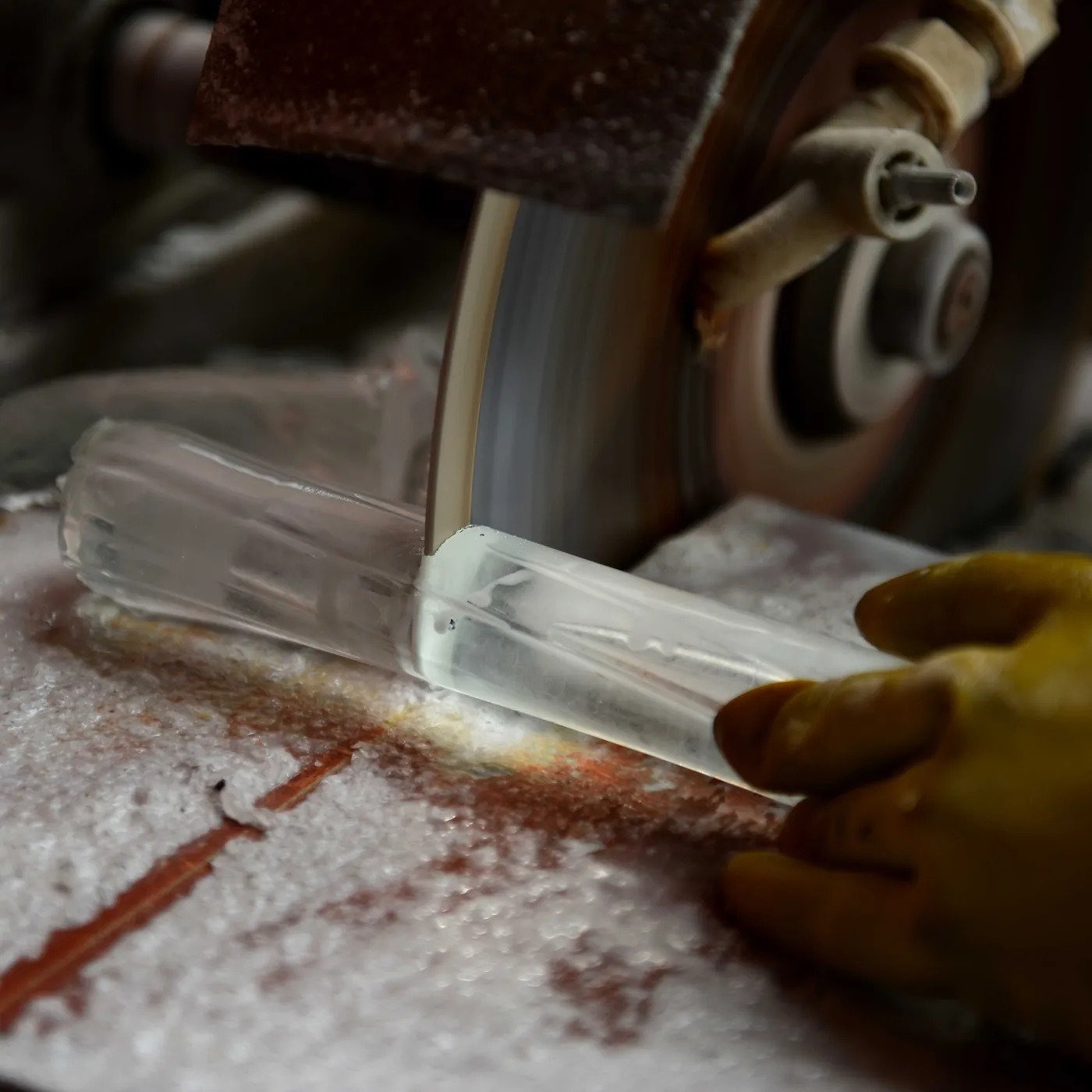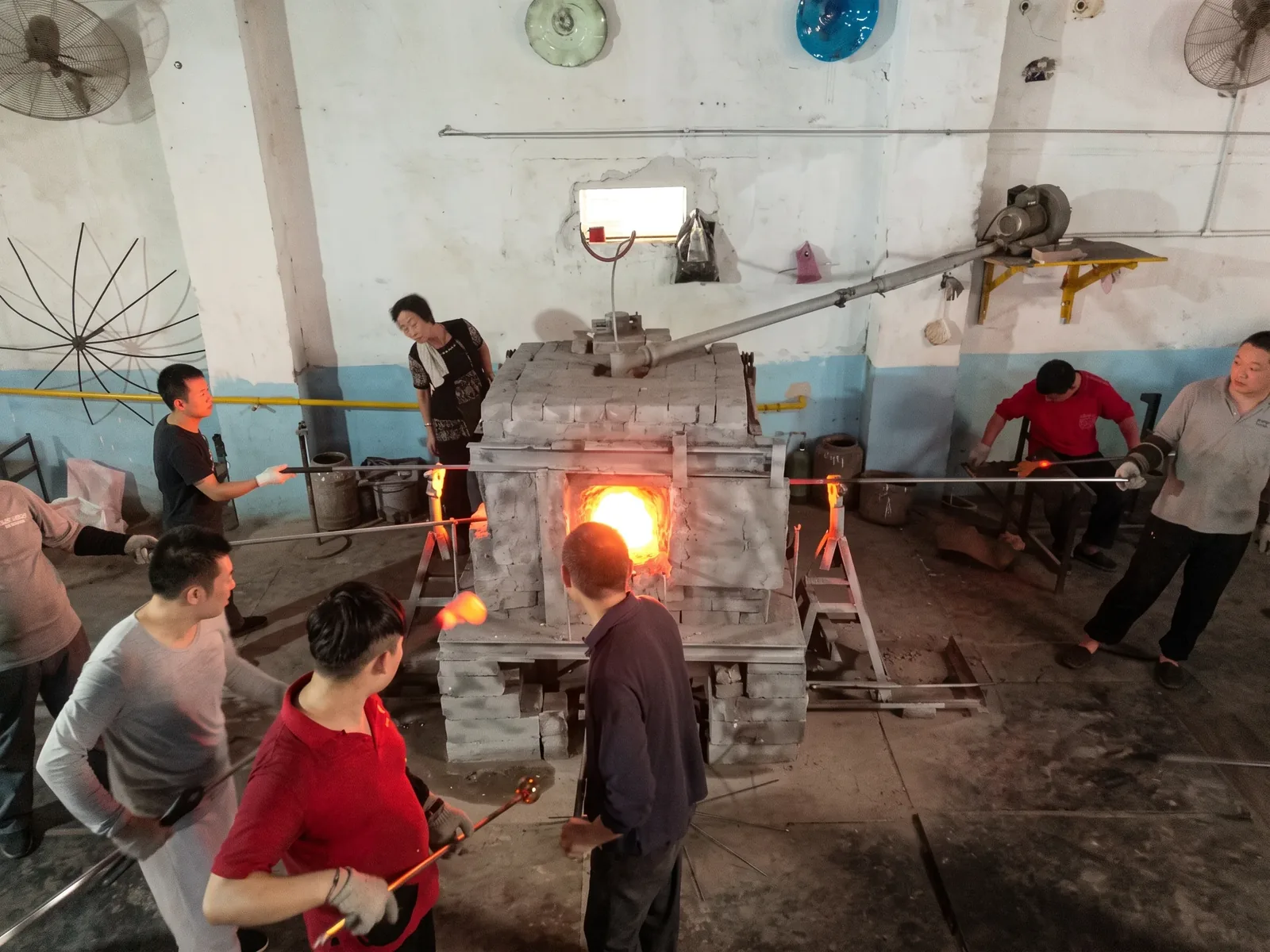
Fluted and ribbed shades get their lines in one of two ways: a full-size mold that gives the shade its final form, or a small patterned mold that only imparts the pattern before the blower finishes the shade by hand (Corning Museum of Glass). On our shades, a molded shade holds a total error of 1 to 2 mm on diameter and height and repeats its pattern, while a hand-finished pattern varies slightly (SIGA workshop estimate, 2026).
- A one-part dip mold imparts a pattern to the glass before it is blown and tooled, while a full-size mold gives the final form (Corning Museum of Glass, 2026).
- Our catalog has ribbed and fluted shapes in both categories: hand-blown and semi hand-blown (SIGA, 2026).
- A molded shade repeats its pattern and holds a total error of 1 to 2 mm on diameter and height, while a hand-blown pattern varies piece to piece (SIGA workshop estimate, 2026).
Fluted glass has parallel grooves or ridges running along the shade, like a column.
Ribbed glass has raised lines, which can run straight, curve or spiral around the shade.
Optic mold is the glassblowers' name for a small patterned mold that puts ribs or points on the glass; on some of our hand-blown shades the blower uses one as a tool (SIGA, 2026).
Fluted and ribbed shades put lines into the light when the lamp is on. Buyers often ask how the lines are made, because it decides whether every shade in an order will match. This guide covers the styles, the mold method and the choices that follow, using the shades we make in Zibo, China.
What are the main styles?
The main styles are straight flutes, vertical ribs, spiral ribs, dimples, diamond points and facets. To our eye, straight flutes and fine vertical ribs read as calm and architectural, like our white ribbed disc. A spiral wraps the lines around the body, as on the smoky swirl globe. Dimples and diamond points break the light into small spots, as on the diamond-point ball. More ribbed and textured pendants are on our glass pendant light shades page.
Clear glass shows the lines best when lit, and milk glass softens them. Our guide to clear, tinted and milk glass explains how the glass changes the effect.
How is the pattern made in a mold?
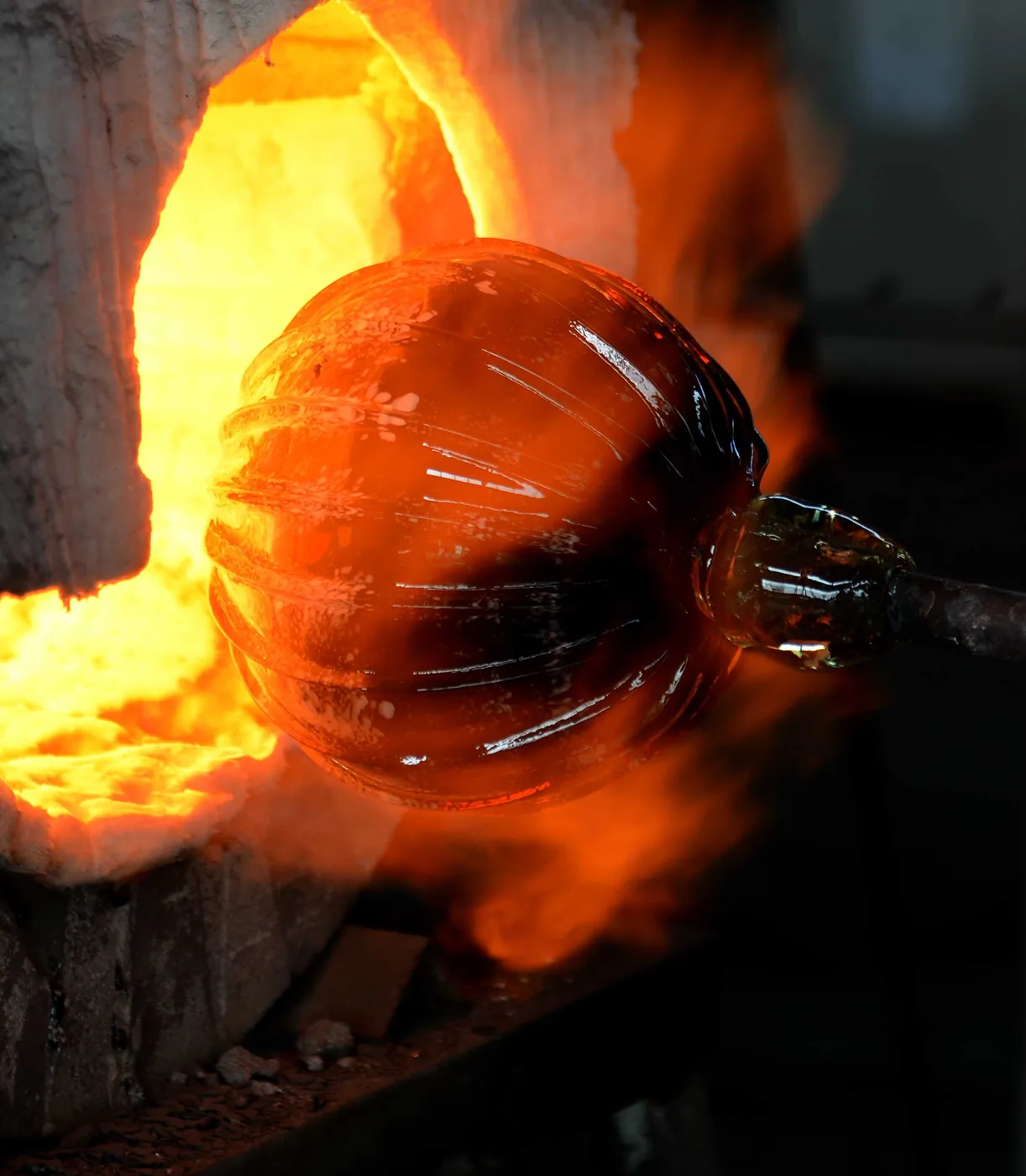
The mold carries the pattern, and the blower fills it with glass. Corning Museum of Glass describes mold blowing as blowing glass into a mold to give it shape (Corning Museum of Glass). An essay in The Met says that a mold used for the final form has at least two parts, so it can be opened, and that plain wares blown in molds came out in uniform size and shape (The Met).
The Corning Museum of Glass separates two kinds. A dip mold is a single part, usually beaker-shaped, and imparts a pattern to the glass before it is blown and tooled; a full-size mold usually has two or more parts that open to release the piece and gives it its final form (Corning Museum of Glass). For our own shades, any shape can be made in a full-size mold (SIGA, 2026).
Can a ribbed shade be fully hand-blown?
Yes. Our catalog includes ribbed and spiral shapes that are fully hand-blown, such as the red ribbed pumpkin and the smoky swirl globe, and ribbed shapes that are semi hand-blown, such as the white ribbed disc. On a fully hand-blown ribbed piece, the blower may use a small ribbed optic mold as a tool; the shade is still fully hand-blown and carries no mold fee (SIGA, 2026). The difference is repeatability: a molded pattern repeats from the first piece to the last, while each hand-blown piece differs slightly and has thicker walls (SIGA, 2026).
How do I choose between a molded and a hand-blown pattern?
Choose a mold if the pattern must match across the order, because the mold fixes the lines and holds a total error of 1 to 2 mm on diameter and height. Choose fully hand-blown if the design welcomes individual differences: a hand-blown piece has a total error of about 5 mm (SIGA workshop estimate, 2026). The cost guide covers the mold fee.
How do ribs and flutes behave when the lamp is lit?
On tinted glass, ribs show as darker and lighter lines, since in colored glass absorbance rises with the thickness the light travels through (James E. Shelby, Lehigh IMI). On clear glass the effect comes from the changing surface rather than from color, and how strong it looks depends on the rib depth and the bulb. We do not publish light transmission figures, so ask for a sample if the light pattern matters and look at it with the bulb you plan to use.
What should I specify for a patterned shade?
Browse the ribbed and fluted shapes in our catalog first; an existing shape is often the quickest reference.
Specify the pattern type, the number of ribs or points, the direction of the lines and whether the lines run to the rim. A photo of a reference shade helps with the look, but the number of ribs and the diameter need to be written. Send them with the three standard measurements, as described in our guide to how to specify a custom glass lamp shade.
Who should not choose a patterned shade?
Do not choose a deeply patterned shade if you need a strictly uniform wall or a very tight tolerance, because the pattern and the process both add variation. We are not the right supplier for orders with excessively strict requirements, so state your tolerance with the first inquiry (SIGA, 2026).
| Item | Write |
|---|---|
| Pattern | Flutes, ribs, spiral, dimples, points or facets |
| Count | Number of ribs or points around the shade |
| Direction | Vertical, spiral or crossing |
| Process | Mold or fully hand-blown, or ask for advice |
| Glass | Clear, tinted or milk |
Sources and Further Reading
- Corning Museum of Glass: Mold Blowing. A museum guide to blowing glass into a mold to give it shape. Checked 2026-10-17.
- The Metropolitan Museum of Art: Roman Mold-Blown Glass. An essay on mold-blown glass, including the uniform size and shape of plain wares. Checked 2026-10-17.
- Corning Museum of Glass: Molds and Moldmaking. Separates one-part dip molds, which impart a pattern, from full-size molds that give the final form. Checked 2026-10-18.
- James E. Shelby, Color in Commercial Glasses (Lehigh University IMI glass course, lecture 4). States the Beer-Lambert law, where absorbance depends on thickness. Checked 2026-10-18.
Frequently Asked Questions
What is an optic mold?
A small patterned mold that puts ribs or points on the glass before the blower finishes the piece. Museums describe this kind as a dip mold, which imparts a pattern rather than the final form (Corning Museum of Glass, 2026). On our hand-blown ribbed shades it is a tool, and no mold fee applies.
Will every ribbed shade in an order match?
In a mold, yes, within a total error of 1 to 2 mm on diameter and height. Fully hand-blown pieces differ slightly, with a total error of about 5 mm, and the approved sample is the reference for the batch (SIGA workshop estimate, 2026).
Can you make a custom rib count?
Any shape can be made in a mold, so a custom rib count is possible for a molded shade. Send the pattern type, the rib count and the diameter with your drawing, and say whether the lines run to the rim, so the pattern is specified in numbers (SIGA, 2026).
Send your pattern, rib count and diameter, and we reply within 12 hours.
Contact our team