Choose clear glass to show the bulb and the light, tinted glass to color the light, and milk glass to hide the bulb and diffuse the light. Fully hand-blown shades come in 14 standard colors, with others made on request, while molded shades are mainly transparent and white, with other colors added by plating or color spraying (SIGA, 2026). Decide the effect first, then send a color code or a photo.
Milk glass, also called opal glass, is white or milky glass whose color comes from light scattering at particles or interfaces inside the glass (James E. Shelby, Lehigh IMI).
Tinted glass is glass colored through the body by metal compounds added to the melt, as opposed to a color applied to the surface.
Ground glass is clear glass whose surface is sandblasted to diffuse light (Edmund Optics).
Buyers often pick a glass by its look on a screen and discover later that the lit shade behaves differently. Glass changes how a lamp looks in three ways: what you see of the bulb, what color the light takes, and how soft the light is. This guide goes through the three families of glass, then shows what to send so the factory can match your idea.
When should I choose clear glass?
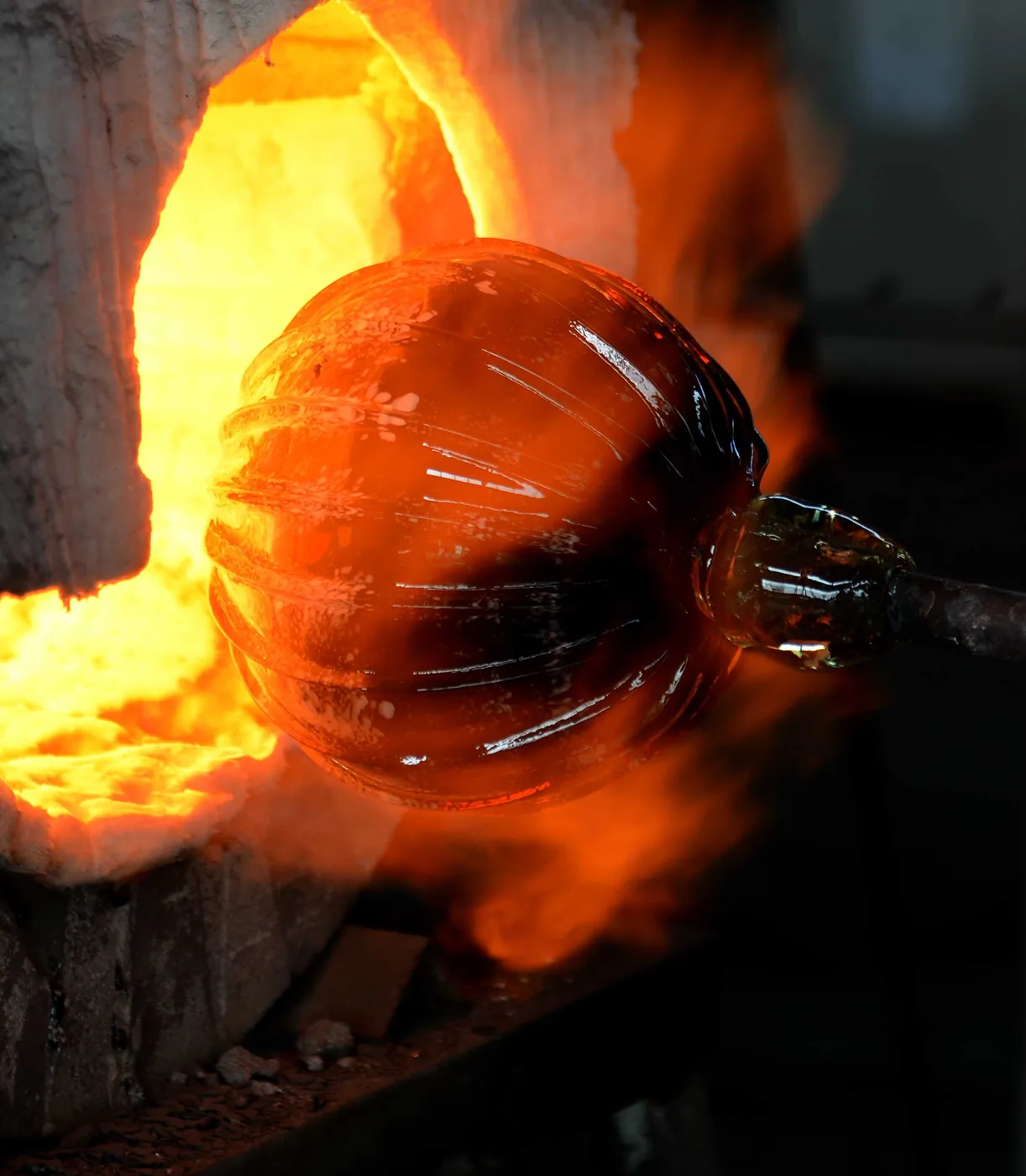
Choose clear glass when you want the surface texture and the bulb to be part of the design. A clear shade passes the light almost unchanged, so ribs, dimples and facets show as bright and dark lines when the lamp is lit. Our catalog includes clear shades with diamond points and rock facets.
The trade-off is that the bulb is visible. If you choose clear glass, plan for a bulb you are happy to see, or a design with a small opening at the top and a deep body.
When should I choose tinted glass?
Choose tinted glass when you want the color to shape the light. Tinted glass takes its color from ions added to the melt: iron gives greens and amber, copper gives blue or green, cobalt gives blue and is so strong that a small amount darkens the glass, chromium gives green and manganese purple (James E. Shelby, Lehigh IMI). Amber, the most common colored glass, is produced by combining iron, sulfur and carbon (Glass Packaging Institute). Our color range shows the colors we blow by hand.
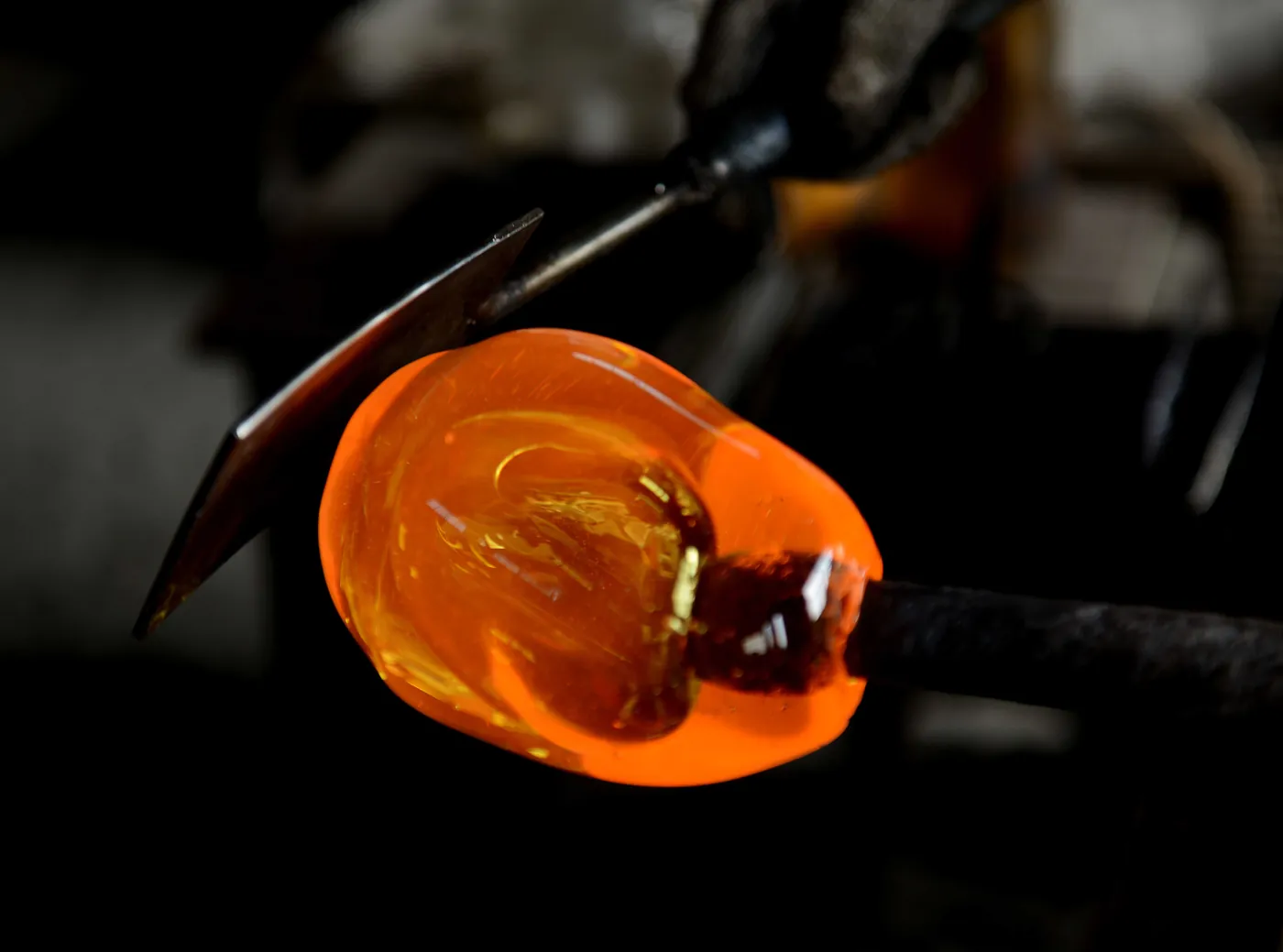
Fully hand-blown shades come in 14 standard colors: Transparent, White, Silver, Black, Gold, Light amber, Deep amber, Yellow, Green, Light blue, Deep Blue, Violet, Purple and Pink, with other colors such as red, grey or turquoise on request, as our color range shows. Whether a color is in the glass or on the surface varies by design, and the quote states it (SIGA, 2026). A deep tint lowers the light that comes through, so a deep blue shade looks rich but gives less light than a light blue one. Ask for a sample if brightness matters to the room.
When should I choose milk glass?
Choose milk glass when you want the bulb hidden and the light soft. The white comes from scattering: particles comparable in size to the wavelength of light, or larger, scatter it by reflection and refraction, and the glass turns white and opaque; a finer structure scatters with a bluish tone (James E. Shelby, Lehigh IMI). White globes like this are on our globe glass lamp shades page.
In optics terms, opal glass diffuses light more efficiently than ground glass, but it also loses more light to scattering, while a finer-grit ground surface transmits more light (Edmund Optics). Read for a lamp, this is our inference and not a measured figure: a milk shade is softer and a little dimmer. Our white shades include a white opal globe.

What about frosted glass?
Frosted glass is a surface finish and not a glass family. It is made by sandblasting, and the grit decides how much it diffuses: a coarser 120-grit surface diffuses more and spreads light wider than a 220-grit surface, which transmits more (Edmund Optics). We offer acid frosting and sandblasting, and opal glass for a diffused look in the glass itself (SIGA, 2026).
| You want | Choose | Watch for |
|---|---|---|
| Texture and bulb on show | Clear | A visible bulb |
| Warm or colored light | Tinted: a color from the 14-color range | Deep tints give less light |
| Hidden bulb, soft light | Milk | Some light is lost to scattering |
What should I send to match a color?
Send a Pantone or RAL code, or a photo of the glass in daylight; RAL, for example, is a body that defines and standardizes color shades rather than making paint (RAL). Tell us whether the shade will be lit or unlit when it is judged. Colors look different with the bulb on, so a lit sample photo helps. Our colors and finishes page lists the options.
When is a color request not a fit for us?
Other colors, such as red, grey or turquoise, can be made on request and are confirmed on the sample, so send the code with the first inquiry (SIGA, 2026). We do not publish light-transmission figures for our colors, so a buyer who needs a measured value for a lighting calculation should ask for a sample and test it.
Settle these before you write.
| Question | Your answer |
|---|---|
| Should the bulb be visible? | ☐ Yes ☐ No |
| Should the light be colored? | ☐ Yes ☐ No |
| Do you have a Pantone or RAL code? | ☐ Code ☐ Photo |
| Will it be judged lit or unlit? | ☐ Lit ☐ Unlit |
Sources and Further Reading
- Edmund Optics: ground glass and opal glass diffusers. Compares how ground glass and opal glass diffuse and transmit light. Manufacturer FAQ. Checked 2026-10-17.
- James E. Shelby, Color in Commercial Glasses (Lehigh University IMI glass course, lecture 4). Covers the ions that color glass, how opal glasses scatter light, and the Beer-Lambert law. Checked 2026-10-18.
- RAL: Frequently asked questions. Explains that RAL defines and standardizes color shades and does not make coatings. Checked 2026-10-18.
- Glass Packaging Institute: Glass Color Chemistry. States that amber is produced by combining iron, sulfur and carbon. Checked 2026-10-18.
Frequently Asked Questions
Which colors do you make?
Fully hand-blown shades come in 14 standard colors: Transparent, White, Silver, Black, Gold, Light amber, Deep amber, Yellow, Green, Light blue, Deep Blue, Violet, Purple and Pink. Molded shades are mainly transparent and white, and other colors are added afterwards by plating or color spraying. We match Pantone or RAL codes on request (SIGA, 2026).
Is milk glass the same as opal glass?
For lamp shades, yes: both names describe white glass whose color comes from light scattering inside the glass (Shelby, Lehigh IMI). Optical suppliers also sell flat "opal" diffusers made with a milky layer on clear glass, which is a different product. In a shade, either reads as milky white and soft.
Does tinted glass give less light?
In general, a deeper tint lets less light through. We do not publish light-transmission figures for our colors, so ask for a sample and test it with your own bulb if brightness matters. A light blue and a deep blue will not behave alike (SIGA, 2026).
Can you make frosted shades?
Frosting is a surface finish made by sandblasting (Edmund Optics, 2026), and we offer frosting by acid etching or sandblasting. Send a photo of the effect you want (SIGA, 2026).
Send your color code or a photo with your drawing, and we reply within 12 hours.
Contact our team