The customer pays the mold fee, the sample fee and the sample shipping, and both fees are paid before the work on them starts. Prices are ex-works, so the customer also arranges freight (SIGA terms, 2026). A mold costs from several hundred to several thousand US dollars, mainly by size, excluding the sample fee. The mold belongs to you, and we keep it for six months after the last production run.
- The mold is a one-time fee paid by the customer, separate from the unit price (SIGA terms, 2026).
- The customer also pays the sample fee and the sample shipping (SIGA terms, 2026).
- The mold belongs to you while it is in use and for six months after the last production run; with no repeat order for the same product in that time, we dispose of it (SIGA terms, 2026).
- For breakage, we make a few extra pieces, replace any further breakage free, and the customer pays the replacement shipping (SIGA terms, 2026).
Mold fee is the one-time charge for making the mold that shapes a molded shade. It is not part of the unit price.
Sample fee is the charge for building the sample to your drawing. It is separate from the mold fee and from the unit price.
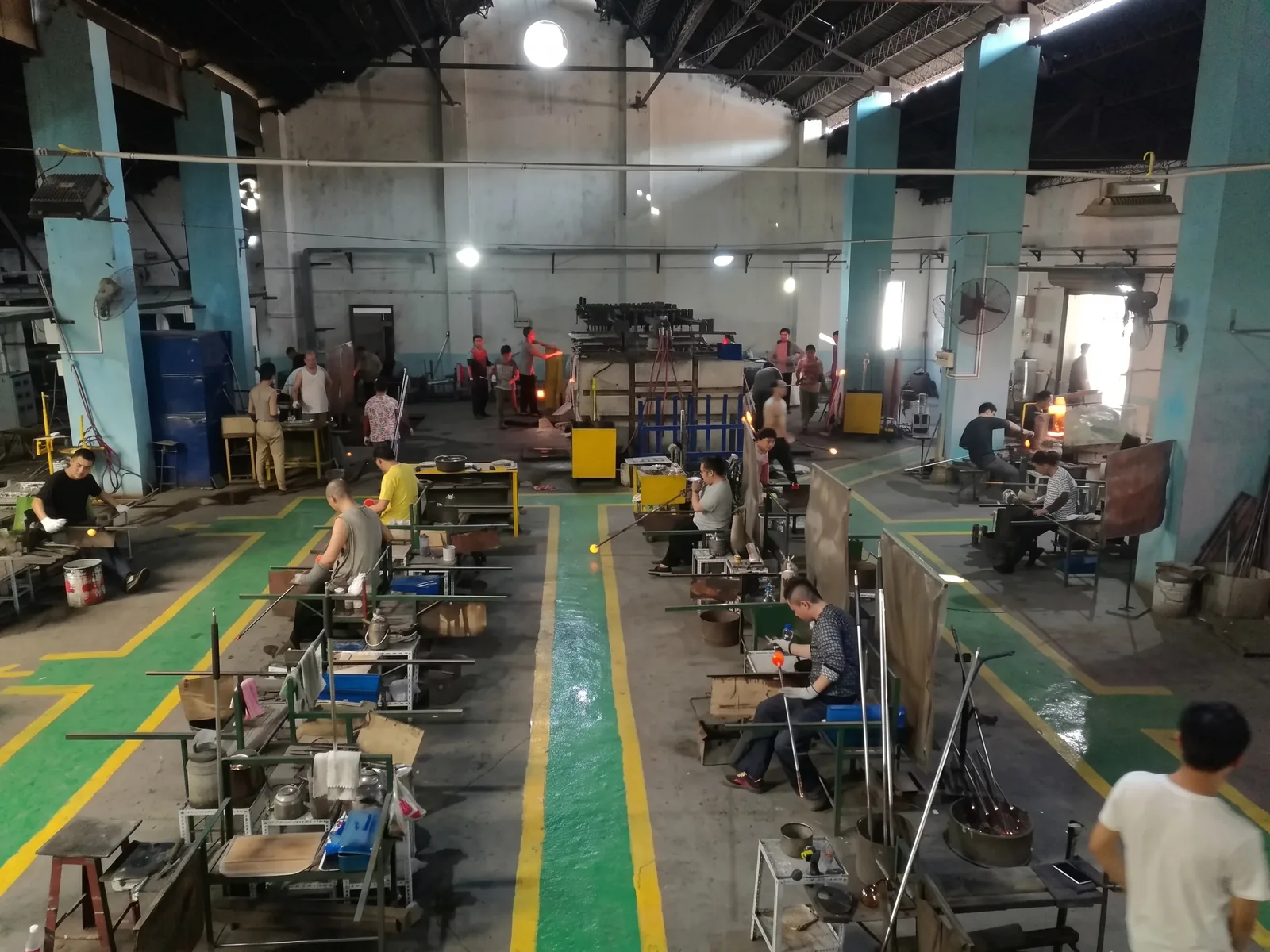
A finance reader wants the whole cost of a first order on one page. This guide lists each charge, who pays it and when it appears, using the terms we apply at SIGA Glass in Zibo, China (SIGA, 2026). Fully hand-blown shades need no mold, so the mold fee applies only to semi hand-blown shades blown in a mold.
| Item | Who pays | Note |
|---|---|---|
| Mold | Customer | One-time fee, separate from the unit price; belongs to you while in use and for six months after the last production run |
| Sample | Customer | Sample fee, not included in the mold price |
| Sample shipping | Customer | Paid separately |
| Production | Customer | 50% down by bank transfer, the balance before shipment |
| Freight and export clearance | Customer | Ex-works; your forwarder, or one we introduce |
| Extra pieces for breakage | We make them | A few extra pieces are usually made |
| Replacements beyond the extras | We replace free | The customer pays the replacement shipping |
Who pays for the mold, and how much is it?
The customer pays for the mold, once. It costs from several hundred to several thousand US dollars, depending mainly on the size of the shade (SIGA terms, 2026). The price does not include the sample fee. We do not spread the mold fee over the pieces in the unit price, so you can see what the tool costs and what each shade costs. Our glass pendant light shades page shows molded and hand-blown pendant shapes side by side.
A mold is a separate tool that has to exist before a molded shade can be blown, as a Corning Museum of Glass guide to molds and moldmaking describes. Any shape can be made in a mold. Fully hand-blown shades need none, so choose the process first: our comparison of hand-blown and mold-blown shades shows how.
Who pays for the sample?
The customer pays the sample fee and the sample shipping (SIGA terms, 2026). We build the sample to your drawing and send photos or video, and bulk production starts only after you confirm it. Further changes are made only when you ask for them, so say what you want changed when you see the photos. A physical sample is shipped only on request, at your cost. If a second sample is needed after your changes, whether it is charged depends on how much changes. The ordering guide gives the sample and mold lead times.
When do the payments fall?
Payment is by bank transfer: 50% down to start production, and the balance before shipment, with no other deposit. Production takes 15 to 20 days, and the exact dates depend on the quantity (SIGA production data, 2026). The mold fee, the sample fee and the sample shipping are charged separately from the unit price (SIGA terms, 2026), so budget for them before you send the first drawing.
The mold fee and the sample fee are paid before the work on them starts (SIGA terms, 2026), and freight is yours to arrange, since prices are ex-works. Put these payments into your budget so a finance team can approve it in one pass; the ordering page lists each step.
How long do you keep my mold?
The mold belongs to you while it is in use and for six months after the last production run, and we keep it for you during that time. If no repeat order for the same product is placed within six months, we dispose of it (SIGA terms, 2026). A repeat order inside that period finds the mold still in storage, so plan it before the six months end.
What happens if shades break in transit?
We usually make a few extra pieces to cover breakage. If more shades arrive broken than the extra pieces cover, we replace them free of charge, and the customer pays the replacement shipping. Report damage or defects within 14 days of delivery (SIGA terms, 2026). We pack shades in foam of 8 kg per cubic meter (SIGA packing practice, 2026). The ISTA publishes test procedures for packaged products shipped through distribution, which you can cite if you want a packing standard written into your order.

Who pays for shipping and export?
You do. Under ex-works the seller makes the goods available at its own premises (ICC Academy), so you arrange transport and export clearance with your own freight forwarder or one we introduce, and we price the goods and the freight separately (SIGA terms, 2026). The ICC's Incoterms rules set out the duties of seller and buyer for each term, and the US International Trade Administration explains who manages shipment, export formalities and insurance under each one.
Agree the forwarder before the goods are ready, because under ex-works the buyer collects them and handles export clearance, so a missing forwarder delays the shipment on your side (ICC Academy).
Who should not order on these terms?
We do not offer free molds or free samples (SIGA terms, 2026). These terms are also a poor fit if you want one delivered price that includes freight. We are not the right supplier in those cases, and it is better to know before you send a drawing.
List each charge before you compare factories.
| Charge | When | Your amount |
|---|---|---|
| Sample fee and sample shipping | Before the sample work starts | ☐ |
| Mold fee, if the shape needs one | Once, before the mold work starts | ☐ |
| 50% down payment | To start production | ☐ |
| Balance | Before shipment | ☐ |
| Freight and export clearance | Arranged by you | ☐ |
Sources and Further Reading
- ICC Academy: FCA and EXW Incoterms 2020 explained. Explains that under ex-works the seller makes the goods available at its premises. Checked 2026-10-17.
- ICC: Incoterms rules. The ICC overview of the rules, which clarify the tasks, costs and risks of delivery from sellers to buyers. Checked 2026-10-17.
- US International Trade Administration: Know Your Incoterms. A plain explanation of who manages the shipment, export formalities and insurance under each rule. Checked 2026-10-17.
- Corning Museum of Glass: Molds and Moldmaking. An overview of how glass molds are made and used. Checked 2026-10-17.
- ISTA. A nonprofit that publishes test procedures for packaged products shipped through distribution. Checked 2026-10-17.
Frequently Asked Questions
Who pays for the mold?
The customer pays the mold fee, once. It is separate from the unit price and costs from several hundred to several thousand US dollars, depending mainly on the size of the shade. Fully hand-blown shades need no mold, so they carry no mold fee (SIGA terms, 2026).
Does the mold price include the sample?
No. The sample fee is charged separately, and so is the sample shipping. Add both to the mold fee when you budget a molded shape, so the first order is not understated and the three figures can be compared with other quotes (SIGA terms, 2026).
How long do you keep the mold?
The mold belongs to you while it is in use and for six months after the last production run. If no repeat order for the same product is placed in that time, we dispose of it. Place a repeat order inside that period so the mold is still available (SIGA terms, 2026).
Who pays when shades break in transit?
We make a few extra pieces to cover breakage and replace any breakage beyond them free of charge. The customer pays the replacement shipping. Agree the packing standard in the order, so the cause of any damage is easier to settle (SIGA terms, 2026).
Send your drawing and quantity, and we quote the mold, the sample and the shades. We reply within 12 hours.
Request a quote