Laboratory borosilicate expands about a third as much as soda-lime when heated, so it tolerates larger sudden temperature changes (CASRAI). Our lamp shades are soda-lime glass (SIGA, 2026). In our judgment, that suits most pendant and table lamps with cool-running bulbs; borosilicate matters when a shade sees rapid or uneven heating.
- Soda-lime is the common glass of bottles and windows. Borosilicate is the heat-resistant glass of laboratory ware.
- Laboratory borosilicate is standardized as borosilicate glass 3.3 in ISO 3585, and its expansion is about a third of soda-lime (CASRAI, 2026).
- Borosilicate is more resistant to thermal shock, but it can still crack under rapid or uneven heating (Wikipedia, 2026).
- Our shades are soda-lime glass, and we do not publish a heat limit for them (SIGA, 2026).
Soda-lime glass is the most common commercial glass, made mainly from silica with soda and lime.
Borosilicate glass is glass with boron trioxide added, which lowers its thermal expansion; the laboratory grade is standardized as borosilicate glass 3.3 in ISO 3585, last confirmed in 2026.
Thermal shock is the stress and cracking that a sudden temperature difference causes in a glass piece.
The question reaches us from buyers who have read that borosilicate is stronger and ask whether lamp shades should use it. The answer depends on where the heat in a lamp comes from and how fast it changes. This guide compares the two glasses on the properties that matter for shades, then says what it means for the shades we make.
How do soda-lime and borosilicate glass compare?
They differ most in how they handle heat. A laboratory guide gives the expansion of borosilicate as 3.3 × 10⁻⁶ per kelvin against 9.0 × 10⁻⁶ for soda-lime, and a thermal shock tolerance of roughly 100 to 160 °C for borosilicate against 30 to 40 °C for soda-lime (CASRAI).
Other sources give different figures for the tolerance, which is a reason not to quote a single number. All of them agree on the direction: borosilicate resists heat swings better than soda-lime.
| Property | Soda-lime | Borosilicate |
|---|---|---|
| Thermal expansion, per kelvin | About 9.0 × 10⁻⁶ | About 3.3 × 10⁻⁶ |
| Thermal shock tolerance | About 30 to 40 °C | About 100 to 160 °C |
| Cost to produce | Lower | Higher |
| Look | Optically similar at a glance | Optically similar at a glance |
Does a lamp shade need borosilicate glass?
Usually it does not. Thermal shock happens when one part of a piece is much hotter than another, as when cold water hits a hot dish. A shade sits around a bulb, and the heat rises slowly when the lamp is switched on. With a cool-running LED bulb, the change is small. A hot bulb in a small closed shade is a harder case, because one spot warms faster than the rest.
Borosilicate becomes useful when a shade will take a sudden cold splash while hot, such as an outdoor fitting, or when it sits very close to a hot source. Even then, borosilicate is not immune: it can crack when the temperature changes rapidly or unevenly (Wikipedia). The safer design choice is a bulb that runs cool and a shade with enough room around it. As a practical check, run the lamp for a few hours in the fitting you plan to sell and measure the glass near the bulb with a surface thermometer, not your hand, since the glass can be hot. That test is our suggestion and not a standard, but it shows hot spots a datasheet does not.

What glass do we make our shades from?
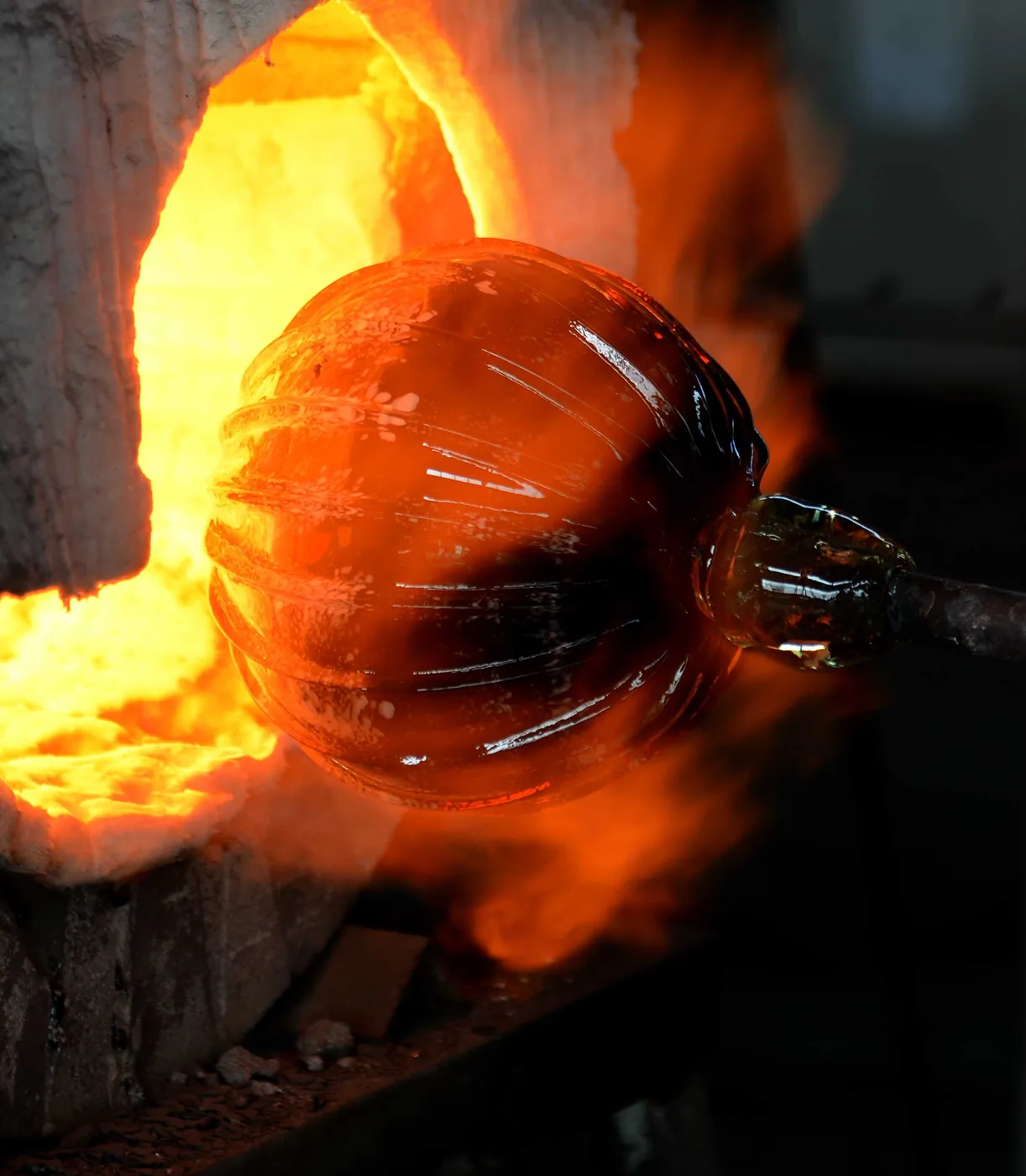
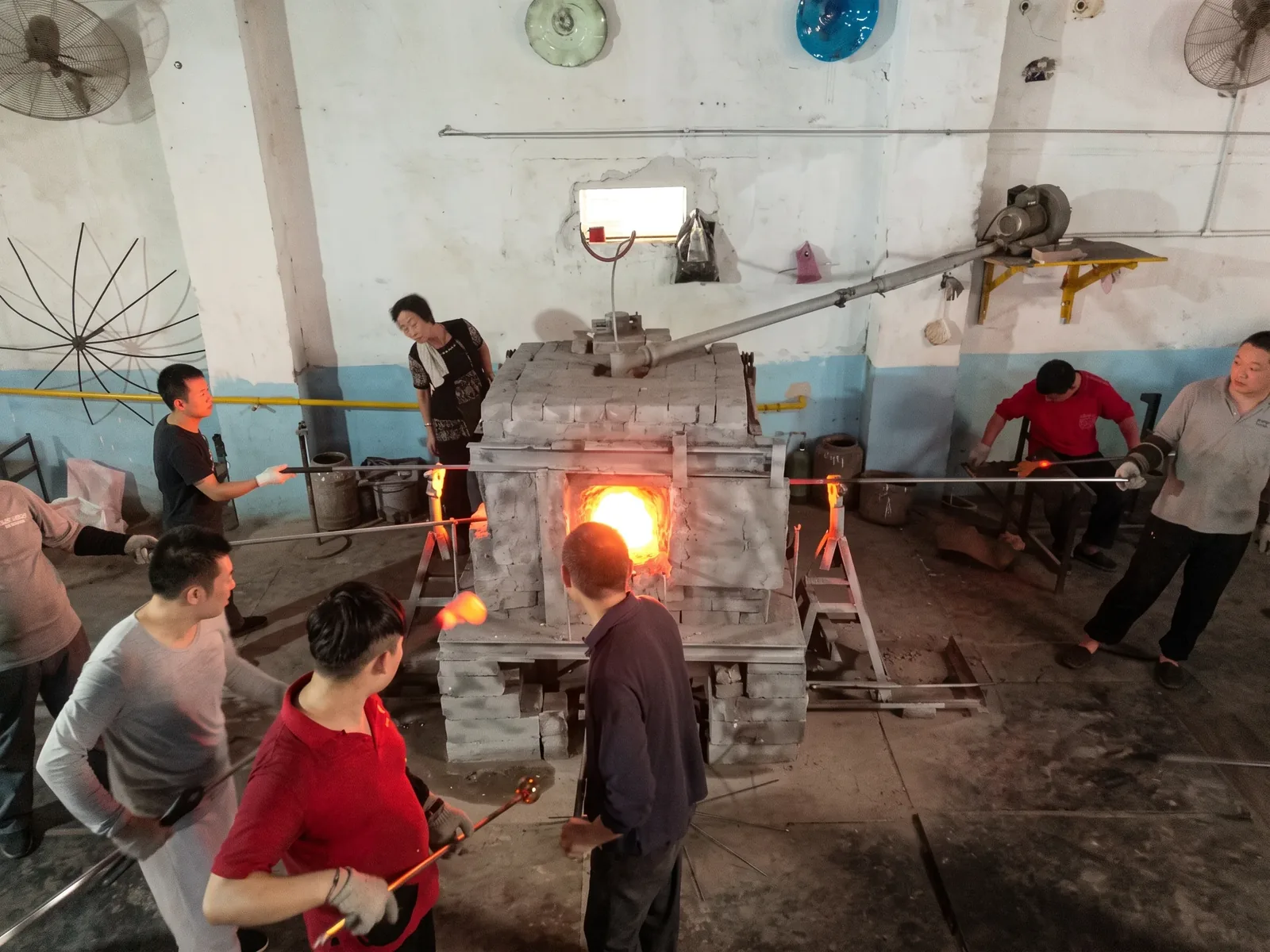
We make all our shades from soda-lime glass, both fully hand-blown and semi hand-blown, and pieces are checked for stress and cracks after annealing, the slow cooling that relieves shaping stress (SIGA, 2026). We do not publish a heat limit for our glass, and we do not offer a figure for the bulb wattage a particular shade can take. If your lamp needs one, tell us the bulb type and wattage in the first message and ask for a sample to test in your fitting. Our globe glass lamp shades page shows soda-lime globes in both processes.
Even the best-known borosilicate brand moved away from it for most consumer ware: a Corning Museum of Glass answer notes that most Pyrex tableware sold in the U.S. is now tempered soda-lime, and it reports a Consumer Product Safety Commission finding that borosilicate is less likely to break under thermal shock while tempered soda-lime is less likely to break on impact (Corning Museum of Glass).
Soda-lime also suits the look of hand-blown and mold-blown shades, because the two glasses look alike to the eye. A materials guide describes them as optically similar at a glance and notes that soda-lime is cheaper to produce (CASRAI). Colors, finishes and texture are what a buyer sees, and those are the same questions for either glass.
Does the glass type change the price?
It can. A laboratory guide says soda-lime is cheaper to produce than borosilicate, and it gives no price figures (CASRAI). Borosilicate also melts at a higher temperature than ordinary glass, and its industrial production needed new techniques (Wikipedia). For a decorative shade, that extra cost buys a heat margin that most lamps do not use.
If you compare two quotes, check that both name the glass type. A quote for borosilicate and a quote for soda-lime are not for the same product.
When is soda-lime the wrong choice?
Soda-lime is the wrong choice for a shade that will be heated hard or cooled suddenly. Our shades are soda-lime, so we are not the right supplier if your project specifies borosilicate (SIGA, 2026). Say so in the first message, so that neither side loses time.
What should I ask any supplier about heat?
Ask four things in writing: the glass type, the bulb type and the maximum wattage the supplier will accept, the gap between bulb and glass in your fitting, and whether a sample can be tested in your lamp. These are the facts that decide thermal stress, and a datasheet value alone does not replace testing the real fitting.
Put these in your inquiry and keep the answers with the order.
| Ask | Why it matters |
|---|---|
| Which glass type is the shade? | Soda-lime and borosilicate behave differently under heat |
| Which bulb, and how many watts? | Decides how hot the glass gets |
| How far is the bulb from the glass? | A small gap makes hot spots |
| Can I test a sample in my lamp? | A test in your fitting beats a datasheet value |
Sources and Further Reading
- CASRAI: borosilicate vs soda-lime laboratory glassware. A side-by-side guide to composition, expansion, thermal shock and cost. Secondary source (laboratory guide). Checked 2026-10-17.
- ISO 3585:1998, Borosilicate glass 3.3, Properties. The international standard for laboratory borosilicate glass 3.3, last reviewed and confirmed in 2026. Checked 2026-10-18.
- Wikipedia: Borosilicate glass. A general background article on composition, expansion and uses. Background source. Checked 2026-10-17.
- Corning Museum of Glass: Pyrex and borosilicate. A museum answer on why most U.S. Pyrex tableware is now tempered soda-lime glass, and the trade-off between thermal shock and impact. Checked 2026-10-17.
Frequently Asked Questions
Are your lamp shades borosilicate?
No. Our shades are made of soda-lime glass. If your project specifies borosilicate, tell us before you design around it, because we would not be the right supplier for that part of the job, and it is better to learn this at the first message (SIGA, 2026).
Is borosilicate unbreakable by heat?
No. Borosilicate resists thermal shock better than soda-lime, but it can still crack under rapid or uneven temperature changes (Wikipedia, 2026). A Corning Museum of Glass answer adds that tempered soda-lime is less likely to break on impact (Corning Museum of Glass, 2026).
Does the glass type change how a shade looks?
Barely. A laboratory guide describes the two glasses as optically similar at a glance (CASRAI, 2026). Color, finish, shape and process decide how a lamp looks lit and unlit, so choose those first and treat the glass type mainly as a heat question.
Can you tell me the maximum wattage for a shade?
We do not publish a heat limit or a maximum wattage. Send the bulb type, the wattage and the gap between bulb and glass, and ask for a sample to test in your own fitting, which tells you more than a datasheet value would (SIGA, 2026).
Send your drawing, bulb type and fitting, and we reply within 12 hours.
Contact our team